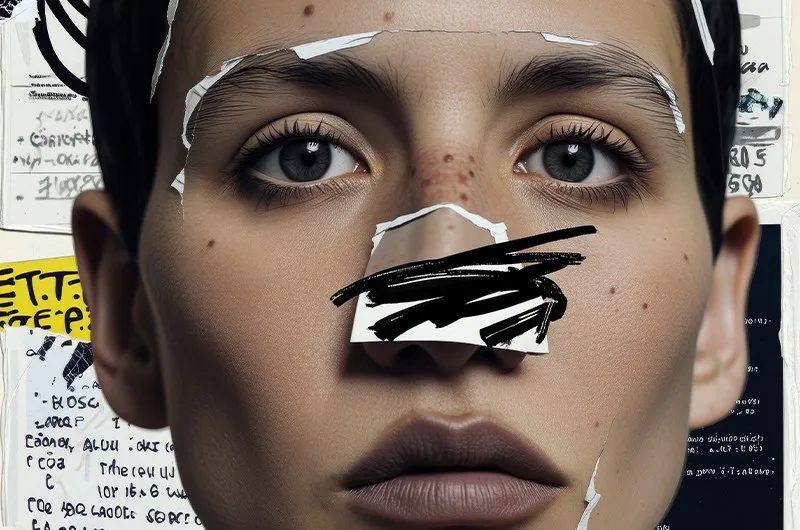
In the Buddhist tradition, the word for this fundamental misperception is moha — often translated as delusion or ignorance. It is considered the deepest of the three poisons, the root from which all suffering grows. But moha is not stupidity. It is not a character flaw. It is a structural feature of the unexamined human mind — a way of perceiving and processing reality that feels completely accurate from the inside, and is systematically, demonstrably wrong.
The Sanskrit word for this obscuration is avidya — literally 'not-seeing.' We are not seeing wrongly, exactly. We are simply not seeing fully. Something essential is obscured. And what is obscured changes everything.
You are not seeing the world as it is. You are seeing the world as you are.
The fundamental misperception, according to every major wisdom tradition, operates at three levels. First: we misperceive the self. We take ourselves to be a fixed, separate, independent entity — an 'I' that exists distinctly from everything else, that was born when this body was born and will end when it ends. This seems so obvious as to be beyond question. And yet contemplative investigation — and, increasingly, neuroscience — suggests it is a construction, not a fact.
Second: we misperceive the nature of phenomena. We see things as permanent, substantial, and independently existing when they are in fact impermanent, interdependent, and processual. Third: we misperceive the cause of our wellbeing. We believe happiness comes from getting what we want, avoiding what we don't want, and maintaining a favorable set of external conditions. Every tradition — and most honest self-reflection — suggests this model does not work.
This teaching is not only Buddhist. In the Christian mystical tradition, this obscuration is sometimes called 'the veil' — the separation from the direct experience of divine presence. The mystics — Meister Eckhart, Thomas Merton, John of the Cross — write of a journey not toward something external but toward a direct, unmediated encounter with the ground of being that was always already present beneath the layers of habitual perception.
The Sufi tradition speaks of hijab — the veil between the human heart and divine reality — and the spiritual path as the process of lifting that veil through love, surrender, and purification of the heart. What is extraordinary is that all of these traditions, developed independently in different cultures across centuries, are pointing at the same fundamental recognition: we are asleep to what is most real. And we can wake up.
✦ KEY INSIGHT: The path to freedom begins not with changing your circumstances but with seeing through the misperception that those circumstances are the source of your suffering.



.png)