You have been breathing since the moment you arrived in this world. Approximately 20,000 times per day. Over a billion times in a lifetime. And for most of those breaths, you were somewhere else entirely — lost in thought, planning ahead, reliving the past, managing the noise of a busy life.
The breath has been waiting. Patiently. Without complaint. Offering itself, again and again, as the most direct available doorway back to the present moment.
You cannot breathe in the past. You cannot breathe in the future. Every breath is, by definition, now. This is why the breath is the oldest and most universal object of contemplative attention in the world.
The breath is extraordinary in what it bridges. It is the one bodily function that is both automatic and voluntary — it happens without your help, and you can also consciously regulate it. This makes it a living interface between the conscious and unconscious, between the voluntary and the involuntary, between the mind and the body.
The autonomic nervous system — the system that governs the body's stress and relaxation responses — is directly accessible through the breath. A slow, full exhalation activates the parasympathetic nervous system — the rest-and-digest system — more reliably than almost any pharmaceutical intervention. Three conscious breaths, with extended exhalation, can measurably reduce cortisol, lower heart rate, and shift the nervous system from the alarm state into the rest state. This is not metaphor. This is physiology.
Every major contemplative tradition uses the breath as a primary object of meditation. In the Buddhist tradition, anapanasati — mindfulness of breathing — is described in a full sutta as a complete path to liberation. The Pranayama practices of the yogic tradition represent thousands of years of systematic investigation into the relationship between breath and consciousness. The hesychast tradition of Eastern Christianity uses the Jesus Prayer synchronized with the breath as its central practice. Indigenous traditions across every continent use specific breathing patterns in ceremony, healing, and vision work.
This convergence is not coincidence. The breath is the place where the deepest questions about the relationship between body, mind, and spirit can be investigated directly, in immediate experience, without any equipment, without any special conditions, without any prior knowledge.
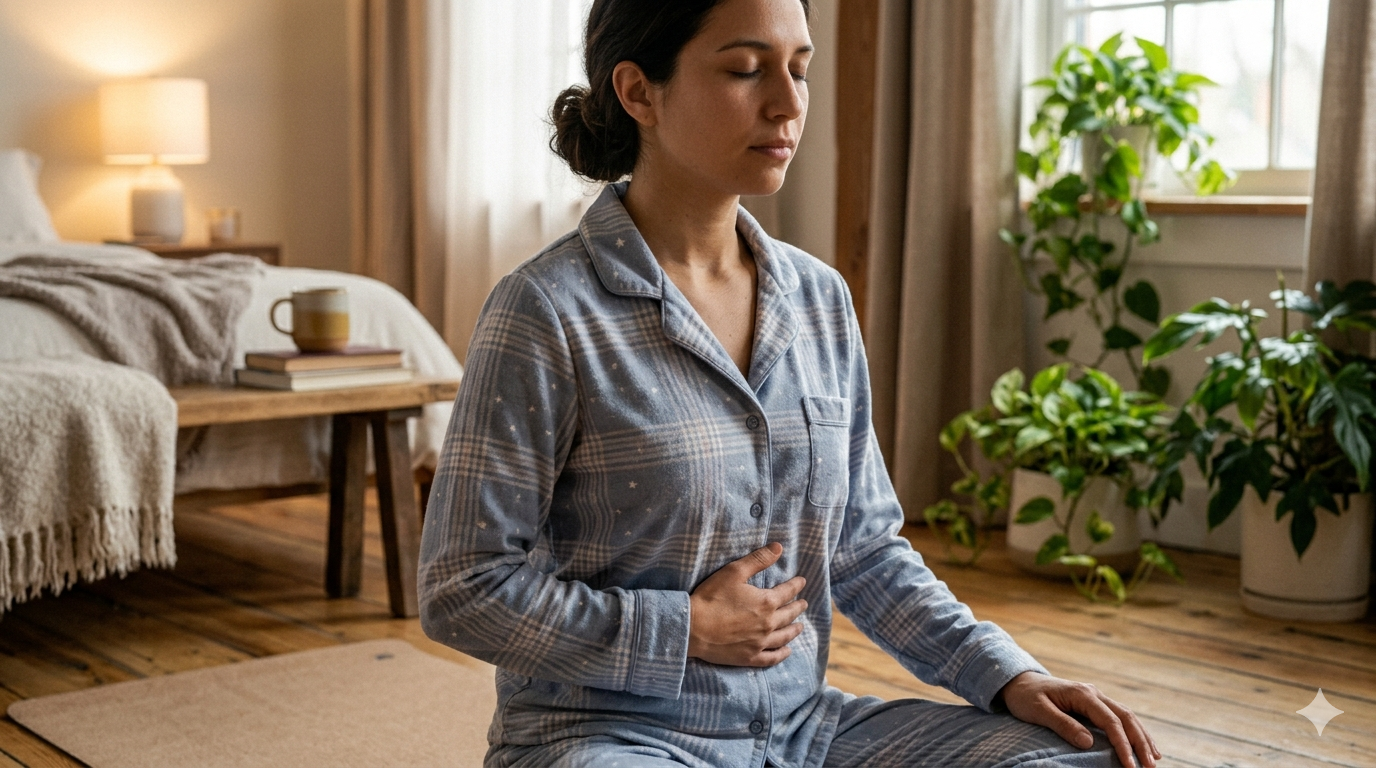
Take one breath. Not a special breath. Not a deep, dramatic cleansing breath. Just one ordinary breath, received with complete attention. Feel the air entering through the nostrils. Feel the slight expansion of the chest and belly. Feel the pause at the top. Feel the release of the exhalation. Feel the stillness at the bottom before the next breath begins.
In that one breath — fully received — is everything the teachings are pointing at. The impermanence: the breath arises and passes. The interdependence: this breath contains the breath of every being who has ever breathed on this planet. The present moment: you cannot receive this breath in the past or the future. And the awareness: the one who notices the breath is prior to the breath, and will be here after the breath has passed.
The breath has been waiting. It is waiting now. Come home to it.



.png)